
Hair to Eyebrow Transplant: Where Does the Donor Hair Actually Come From? +90 505 707 4848
Most people picture an eyebrow transplant as hair simply “appearing” in the brow area. What’s actually happening is a precise relocation: individual living follicles are moved from a donor area on your own body to the eyebrow, where they continue growing exactly as they did at their original site — texture, growth rate, and all.
That last part is the detail most patients underestimate. Because transplanted hair keeps behaving like the donor hair it came from, where that hair is harvested from has a direct, lasting effect on how natural your eyebrows look and how much maintenance they’ll need. This guide breaks down the donor hair options used in eyebrow transplants, why scalp hair is the default choice, and when alternatives come into play.
Why Donor Hair Selection Matters So Much for Eyebrows
Eyebrow hair is naturally fine, short, and slow-growing compared to hair almost anywhere else on the body. A transplant’s goal is to match that as closely as possible — because whichever donor hair is used, it will keep its original growth characteristics permanently. Choosing the wrong donor source doesn’t just affect texture; it changes how often you’ll need to trim, how the brow lies against the skin, and how convincingly it blends with any remaining natural brow hair.
Scalp Hair: The Standard Donor Source
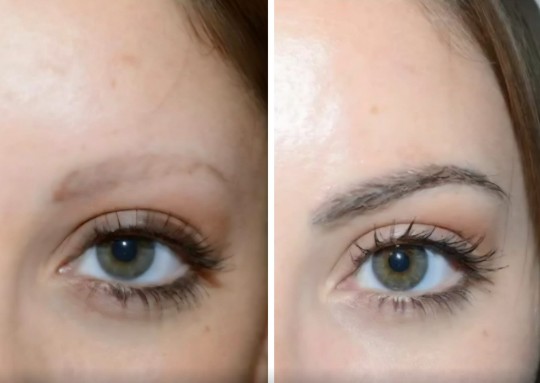
For the vast majority of eyebrow transplants, hair is harvested from the back of the scalp — the same “safe donor zone” used in standard hair transplants, chosen because it’s genetically resistant to the hormonal triggers behind most hair loss.
Why scalp hair works well for eyebrows:
- Fine texture that closely resembles natural eyebrow hair
- Reliable, well-documented graft survival rates
- Abundant supply for most patients, since eyebrow procedures require relatively few grafts compared to scalp restoration
- Surgeons can selectively choose the finest-textured hairs from the donor area for a closer match
The trade-off to understand: scalp hair grows faster and longer than natural eyebrow hair — averaging roughly 0.8–1.2 cm per month, compared to the much slower cycle of natural brow hair. This is why transplanted eyebrows need routine trimming, typically every 2–4 weeks, indefinitely. It’s a permanent maintenance habit, not a temporary post-surgery step.
Beard Hair: A Secondary Option, Mainly for Men
When scalp donor supply is limited — often due to previous hair transplants, extensive hair loss, or a personal preference to preserve scalp density — beard hair is sometimes used as an alternative or supplementary donor source, primarily in male patients.
Considerations with beard hair:
- Thicker and coarser than scalp hair, which can create a bulkier appearance if not blended carefully
- Grows faster than scalp hair, meaning even more frequent trimming
- Requires more precise, experienced placement to avoid an uneven or “pluggy” look
- Generally reserved for cases where scalp supply genuinely can’t meet the need, rather than a first-choice option
Donor Hair Comparison at a Glance
| Donor Source | Texture Match to Eyebrows | Growth Rate | Typical Use Case |
|---|---|---|---|
| Scalp (back of head) | Closest natural match | Moderate, needs regular trimming | Default choice for nearly all patients |
| Beard | Coarser, thicker | Fastest, needs frequent trimming | Male patients with limited scalp supply |
| Body hair (chest, other areas) | Poor match, shorter growth cycle | Slower, limited length | Rarely used; considered only in unusual cases |
Why Body Hair Is Rarely Used for Eyebrows
Body hair from areas like the chest is occasionally discussed as a donor option in general hair restoration, but it’s a poor fit for eyebrows specifically. Body hair follows a much shorter growth cycle and different texture profile than either scalp or eyebrow hair, which limits both how long it grows and how naturally it blends. For eyebrow work — where a fine, closely matched texture matters more than in almost any other transplant area — surgeons generally avoid it unless no other viable donor option exists.
How Surgeons Select the Right Donor Hairs
A skilled surgeon doesn’t simply harvest hair from a general area — they selectively choose individual follicles based on:
- Hair caliber — finer strands are prioritized to match natural eyebrow texture
- Natural curl and direction — hairs with a growth pattern closer to eyebrow hair are chosen over coarser, more textured strands
- Density needs — the number of grafts required is balanced against maintaining a natural, undetectable donor area afterward
This selection process is a large part of why surgeon experience — not just technique brand name (FUE, Sapphire, DHI) — is the biggest factor in how natural the final result looks.
What This Means for Your Results
Because transplanted hair permanently retains the growth behavior of its donor site, understanding your donor source in advance helps set realistic expectations:
- Expect routine trimming as a lifelong habit, not a temporary recovery step
- Scalp-donor eyebrows will generally require less aggressive maintenance than beard-donor eyebrows
- Ask your surgeon directly which donor source they plan to use and why, especially if you have limited scalp hair availability
Frequently Asked Questions
Where does eyebrow transplant hair usually come from? The back of the scalp is the standard donor source for the vast majority of eyebrow transplant patients.
Can beard hair be used for an eyebrow transplant? Yes, primarily in male patients when scalp donor supply is limited, though it’s coarser and requires more frequent trimming than scalp hair.
Will transplanted eyebrow hair keep growing like the donor area? Yes — transplanted follicles permanently retain the growth rate and texture of their original donor site, which is why routine trimming is a long-term requirement.
How often will I need to trim transplanted eyebrows? Most patients trim every 2–4 weeks, since donor hair (usually scalp) grows faster and longer than natural eyebrow hair.
Is body hair ever used for eyebrow transplants? Rarely — body hair has a poor texture match and shorter growth cycle compared to scalp or beard hair, so it’s generally avoided unless no better option exists.
Does the donor source affect how natural my eyebrows look? Yes significantly — scalp hair typically provides the closest natural match, while coarser sources like beard hair require more careful, experienced placement to blend well.
Can I choose which donor area is used? Your surgeon will recommend the most suitable donor source based on your hair characteristics and availability, though your preferences should be part of that consultation.
Does using beard hair affect how many grafts I need? Not directly, but graft planning always accounts for the texture and growth pattern of whichever donor source is selected.
Will my transplanted eyebrow hair color match my natural eyebrows? In most cases, yes, since donor hair (particularly from the scalp) is generally selected to closely match natural pigmentation, though slight variation is possible.
Where Does the Donor Hair Actually Come From? +90 505 707 4848
The donor hair source is one of the most overlooked factors in eyebrow transplant planning, even though it directly shapes your long-term maintenance routine and how natural the final result looks. Scalp hair remains the gold standard for good reason — it offers the closest natural match and the most predictable outcomes — with beard hair reserved as a secondary option for specific cases. Ask your surgeon directly which source they’re planning to use, and why, before you commit to a procedure.
Want a personalized assessment of the right donor source for your case? [Book a free consultation] to find out which approach will give you the most natural, low-maintenance results.